13-April-26
For thousands of years, humans have sought ways to understand the future and make sense of life’s uncertainties. Long before modern science and technology, ancient civilizations developed powerful systems to predict events, guide decisions, and uncover hidden truths about human life.
Surprisingly, many of these ancient prediction methods are still widely practiced today and continue to influence millions of people across the world. From Indian palm leaf readings to Western Tarot cards, these systems have stood the test of time due to their depth, symbolism, and spiritual significance.
Despite rapid technological advancements, people still turn to ancient prediction systems for guidance. The reason lies in their holistic approach. These systems do not just focus on predicting events but also provide emotional, psychological, and spiritual insights.
They help individuals understand patterns in life, make informed decisions, and find meaning in their experiences. This combination of prediction and guidance makes them relevant even in today’s fast-paced world.
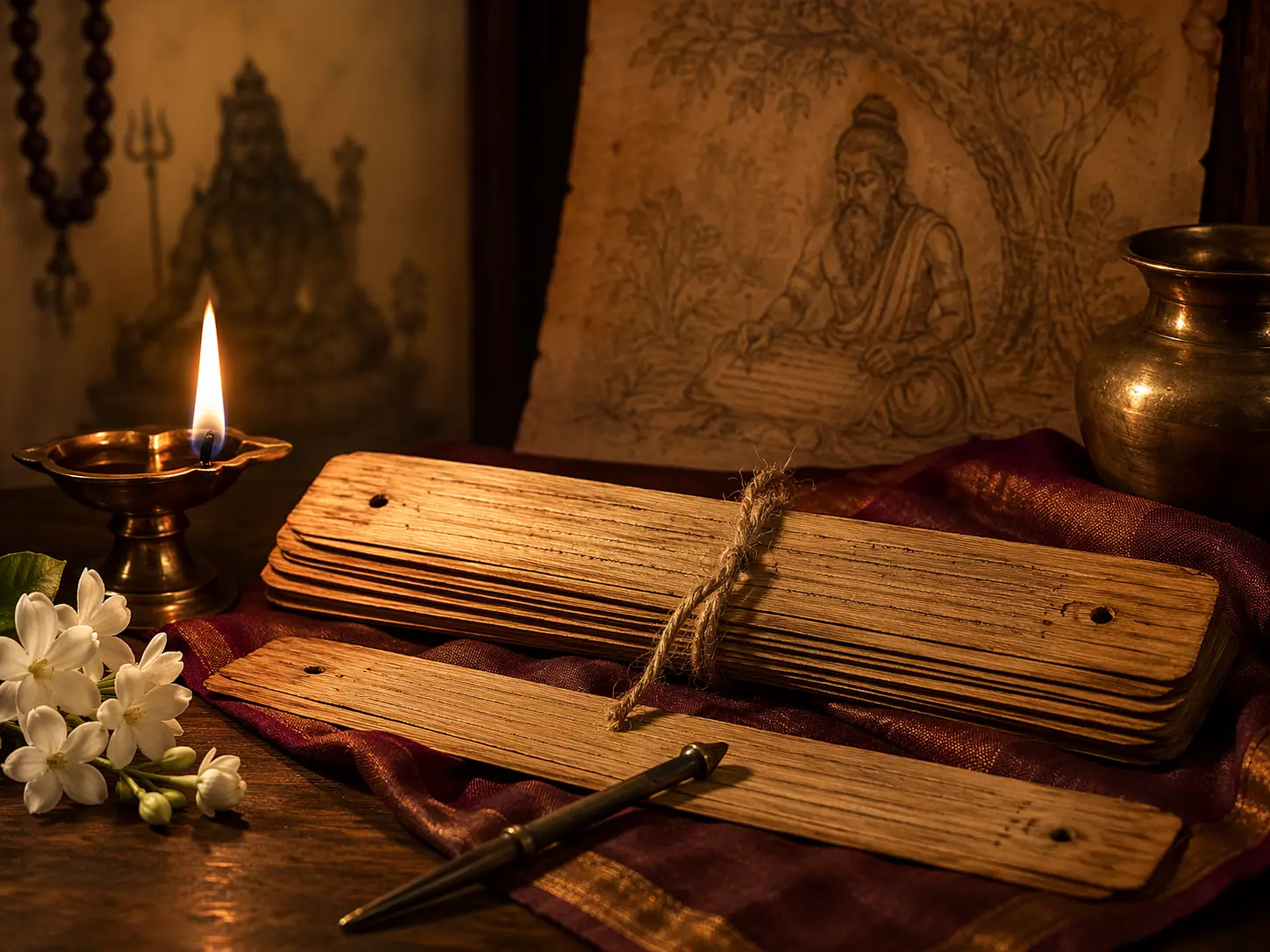
One of the most unique and mysterious systems is Nadi Astrology. It is believed that sages like Agastya Muni recorded human destinies on palm leaves thousands of years ago.
This system identifies individuals through thumb impressions and reveals detailed life predictions, including career, marriage, health, and spiritual growth. It also provides remedies to overcome challenges.
Nadi Astrology stands out for its highly personalized and specific nature, making it one of the most sought-after prediction methods in India.
Vedic Astrology, also known as Jyotish Shastra, is another ancient Indian system that continues to influence millions. It is based on the positions of planets and stars at the time of a person’s birth.
This system analyzes planetary movements to predict life events and guide decisions related to career, marriage, health, and finances. It also includes remedies such as gemstone therapy, mantras, and rituals.
Vedic Astrology is widely practiced and respected for its structured and mathematical approach.
The I Ching, or Book of Changes, is an ancient Chinese system of divination that uses hexagrams to provide guidance. It is based on the principles of balance and transformation.
By tossing coins or sticks, individuals generate a hexagram, which is then interpreted to understand current situations and future possibilities. The I Ching focuses more on guidance and wisdom rather than direct prediction.
Tarot reading is a popular method in Western culture that uses a deck of cards with symbolic images. Each card represents different aspects of life, emotions, and experiences.
During a reading, cards are drawn and interpreted to provide insights into the past, present, and future. Tarot is often used for self-reflection, decision-making, and understanding personal challenges.
Numerology is based on the belief that numbers have a significant influence on human life. By analyzing numbers related to birth dates and names, numerologists provide insights into personality, strengths, and future events.
This system is simple yet powerful and is used worldwide for guidance in personal and professional matters.
Palmistry is another ancient method that interprets the lines, shapes, and features of the hand to understand a person’s life and character.
It provides insights into personality traits, health, relationships, and future possibilities. Palmistry is often used as a quick and accessible form of prediction.
Despite their differences, these ancient prediction methods share common principles:
These shared elements highlight a universal human desire to understand life and its purpose.
The accuracy of ancient prediction methods is often debated. While many people report highly accurate experiences, others view them as symbolic or psychological tools.
Their effectiveness often depends on interpretation, belief, and the skill of the practitioner. Regardless of accuracy, they continue to provide comfort, clarity, and direction to millions.
In today’s world, these systems are not just used for predicting the future but also for self-discovery and personal growth. Many people use them to:
Their adaptability has allowed them to remain relevant across generations.
Ancient prediction methods have survived for centuries because they offer more than just answers—they provide meaning, guidance, and a deeper understanding of life. Systems like Nadi Astrology, Vedic Astrology, Tarot, and others continue to influence millions by bridging the gap between the past and the present.
With the wisdom of sages like Agastya Muni and the evolution of global traditions, these timeless practices remain powerful tools for navigating life’s journey.
They are traditional systems developed by ancient civilizations to predict future events and guide life decisions.
Systems like Nadi Astrology and Vedic Astrology are among the oldest known methods.
Yes, millions of people worldwide continue to use them for guidance and insight.
Accuracy varies, but many people find them helpful for understanding life patterns and making decisions.
They provide a combination of prediction, guidance, and spiritual insight that resonates with human curiosity and needs.
Dr.A.Sivasamy,
Sri Agasthiya Mahasiva Sukshma Nadi Jothida Nilayam ,
S/O V.S.Arul Siva Arumugam,
18, Milladi Street, Mayiladuthurai District,
Railway station Road, Opp Indian Bank,
VaitheeswaranKoil - 609 117,
Tamilnadu, South India.
04364 279463 |
+91 93 62 22 77 79 |
+91 94 89 25 69 05.
sivasamee@hotmail.com | sivasamee@yahoo.com