09-April-2626
In Vedic astrology, the concept of Nadi is deeply connected to the human body’s energy system. The word Nadiliterally means “pulse” or “channel,” representing the flow of life energy (Prana) within us. Nadi plays a vital role in Kundali matching, especially in determining marital compatibility.
If you’ve ever wondered “How do I calculate my Nadi?” — this guide will explain the complete process, the meaning of different Nadi types, and how it influences your relationships, health, and destiny.
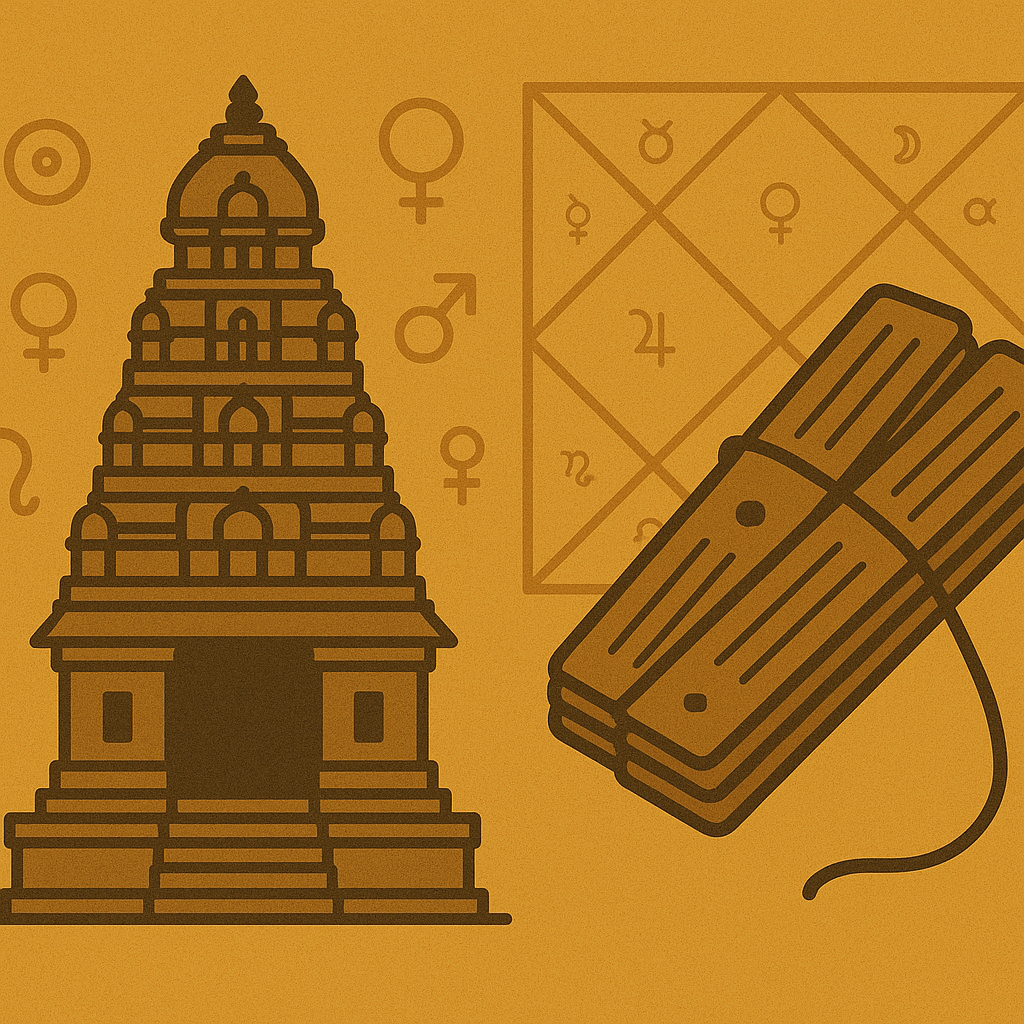
In ancient Vedic scriptures, Nadi is described as one of the eight factors (Ashta Koota) used to assess the compatibility between two people for marriage. It reflects a person’s nature, temperament, health, and energy type.
The three Nadis—Adi, Madhya, and Antya—represent the three doshas or body energies: Vata (air), Pitta (fire), and Kapha (water). Each of these corresponds to a distinct pattern of physical and emotional behavior.
| Nadi Type | Element | Nature / Personality Traits |
|---|---|---|
| Adi Nadi (Vata) | Air | Quick, intelligent, restless, energetic, flexible |
| Madhya Nadi (Pitta) | Fire | Passionate, assertive, ambitious, strong-willed |
| Antya Nadi (Kapha) | Water | Calm, loyal, emotional, patient, nurturing |
These Nadis show how a person expresses energy, handles emotions, and connects with others. Understanding your Nadi helps you achieve balance in life and relationships.
In Hindu astrology, marriage is not only a physical and emotional union but also a spiritual connection between two souls. The Nadi Koota test determines whether the couple’s energy frequencies complement each other.
If both partners have the same Nadi, it is considered Nadi Dosha — a mismatch that could lead to health or compatibility issues.
If they have different Nadis, it is believed to bring harmony and balance in the relationship.
In Ashta Koota Milan, Nadi carries the highest score (8 out of 36), showing its importance in determining the strength of a marriage match.
You can calculate your Nadi easily using your Janma Nakshatra (birth star). Let’s go through the process step-by-step.
You’ll need three key details:
Date of Birth
Time of Birth
Place of Birth
These details help generate your birth chart (Kundali), which reveals your Nakshatra.
You can use an online Vedic astrology calculator or consult a professional astrologer. Your Nakshatra is determined by the position of the Moon at the time of your birth.
Each Nakshatra belongs to one of the three Nadis — Adi, Madhya, or Antya.
Here’s the complete Nadi classification table:
| Nadi | Nakshatras |
|---|---|
| Adi Nadi | Ashwini, Ardra, Punarvasu, Uttara Phalguni, Hasta, Jyeshtha, Moola, Shatabhisha, Purva Bhadrapada |
| Madhya Nadi | Bharani, Mrigashira, Pushya, Purva Phalguni, Chitra, Anuradha, Purvashada, Dhanishta, Uttara Bhadrapada |
| Antya Nadi | Krittika, Rohini, Ashlesha, Magha, Swati, Vishakha, Uttarashada, Shravana, Revati |
Once you know your Nadi, check if your partner’s Nadi is different from yours.
Different Nadi: Good match (compatible energies).
Same Nadi: Nadi Dosha (energy clash — consult astrologer).
Let’s say your Nakshatra is Rohini and your partner’s Nakshatra is Chitra.
Rohini → Antya Nadi
Chitra → Madhya Nadi
The Nadis are different — this is a good and compatible match.
However, if both were Rohini (Antya Nadi), it forms a Nadi Dosha, which traditionally requires remedies before marriage.
Beyond astrology, Nadi also holds a deep spiritual and physiological meaning. In yogic philosophy, the human body has 72,000 energy channels (Nadis) through which Prana (life energy) flows. The three main ones are:
Ida Nadi – Left channel (moon energy – calm, emotional)
Pingala Nadi – Right channel (sun energy – active, dynamic)
Sushumna Nadi – Central channel (spiritual balance and awakening)
The three Nadis in astrology mirror these yogic energies:
| Astrological Nadi | Yogic Equivalent | Symbolism |
|---|---|---|
| Adi Nadi | Pingala | Action, movement, masculine energy |
| Madhya Nadi | Sushumna | Balance, transformation, spiritual focus |
| Antya Nadi | Ida | Peace, emotion, feminine energy |
Hence, Nadi matching ensures not just physical harmony but also energetic alignment between two souls.
Nadi Dosha occurs when both partners have the same Nadi. Ancient texts suggest that such couples might face challenges like:
Health issues or weak vitality
Lack of emotional understanding
Problems in childbirth or children’s health
However, in modern astrology, these results are not taken as absolute. Many factors, such as planetary positions, Lagna (Ascendant), and Navamsa charts, can modify or even cancel the Dosha.
There are certain astrological exceptions (Nadi Dosha Nivaran) where the Dosha is neutralized:
Different Nakshatra Padas: If both are born in the same Nakshatra but different Padas (quarters), the Dosha may not apply.
Same Rashi, Different Nakshatra: If their zodiac signs are the same but Nakshatras are different, the energy may balance out.
Strong Moon and Lagna Compatibility: Favorable Moon sign aspects can reduce Nadi Dosha effects.
Divine Blessing Match: If both charts show strong blessings from Jupiter, Venus, or the 5th/7th house, Nadi Dosha may not be significant.
If Nadi Dosha exists, it can be remedied through traditional spiritual rituals and practices. Some effective Nadi Dosha remedies include:
Nadi Dosha Nivaran Puja: A sacred ritual performed by Vedic priests to neutralize Dosha effects.
Maha Mrityunjaya Japa: Chanting Lord Shiva’s mantra 108 times daily to promote health and harmony.
Charity and Feeding the Poor: Donating food, clothes, or offering meals to Brahmins or orphans is believed to reduce karmic imbalance.
Marriage After Proper Muhurat: Choosing an auspicious time (Muhurat) based on planetary alignment can reduce Dosha impact.
Compatibility in Other Ashta Kootas: If Guna Milan scores are high in other areas (like Gana, Yoni, or Rashi), the Dosha’s negative effects are reduced.
In Ayurveda, the three Nadis correspond to three doshas that govern body functions:
Adi Nadi → Vata (Air & Space): Controls movement and communication.
Madhya Nadi → Pitta (Fire & Water): Manages metabolism and digestion.
Antya Nadi → Kapha (Water & Earth): Maintains structure and stability.
An imbalance among these leads to health problems. By knowing your Nadi, you can follow a lifestyle that restores balance through diet, yoga, and meditation.
It’s important not to confuse Nadi Astrology (palm leaf reading) with Nadi Dosha in Vedic astrology.
Nadi Astrology is an ancient Tamil practice found in Vaitheeswaran Koil, where palm leaves contain details of souls written by sages like Agasthiyar thousands of years ago.
Nadi Dosha is a concept from Kundali matching that focuses on energy compatibility.
Both share the same Sanskrit root “Nadi,” meaning energy channel or life force, but they serve different purposes.
Traditionally, it’s discouraged. However, if other chart factors are highly compatible or Nadi Dosha gets cancelled, marriage can still be successful.
No. Your Nadi is based on your Nakshatra, which is fixed at birth. However, you can balance its energy through spiritual practices and remedies.
While it’s not mandatory, understanding your energy compatibility helps ensure emotional and physical harmony.
All three Nadis are equally important and divine. The key is maintaining balance according to your natural constitution.
Calculating your Nadi is more than a marriage ritual — it’s about understanding your inner energy system. Your Nadi reveals how you respond to life, love, and relationships.
When you and your partner’s Nadis complement each other, it creates a powerful energetic balance that supports a harmonious and fulfilling relationship. Even if Nadi Dosha exists, astrology offers ways to harmonize these energies through rituals, devotion, and self-awareness.
In essence, Nadi is not just about compatibility — it’s about consciousness. Knowing your Nadi helps you align your life with the universe’s natural rhythm and live with more balance, health, and spiritual harmony.

Dr.A.Sivasamy,
Sri Agasthiya Mahasiva Sukshma Nadi Jothida Nilayam ,
S/O V.S.Arul Siva Arumugam,
18, Milladi Street, Nagai District,
Railway station Road, Opp Indian Bank,
VaitheeswaranKoil - 609 117,
Tamilnadu, South India,
04364 279463 |
+91 93 62 22 77 79 |
+91 94 89 25 69 05.
sivasamee@hotmail.com | sivasamee@yahoo.com
Beware of fakes & misguiding websites .© 2026 Srisivanadi All Right Reserved.Design & Developed by
 InnovTouch Technologies